What Does the Coast Really Cost? Breaking Down San Diego’s Coastal Premium by the Square Foot
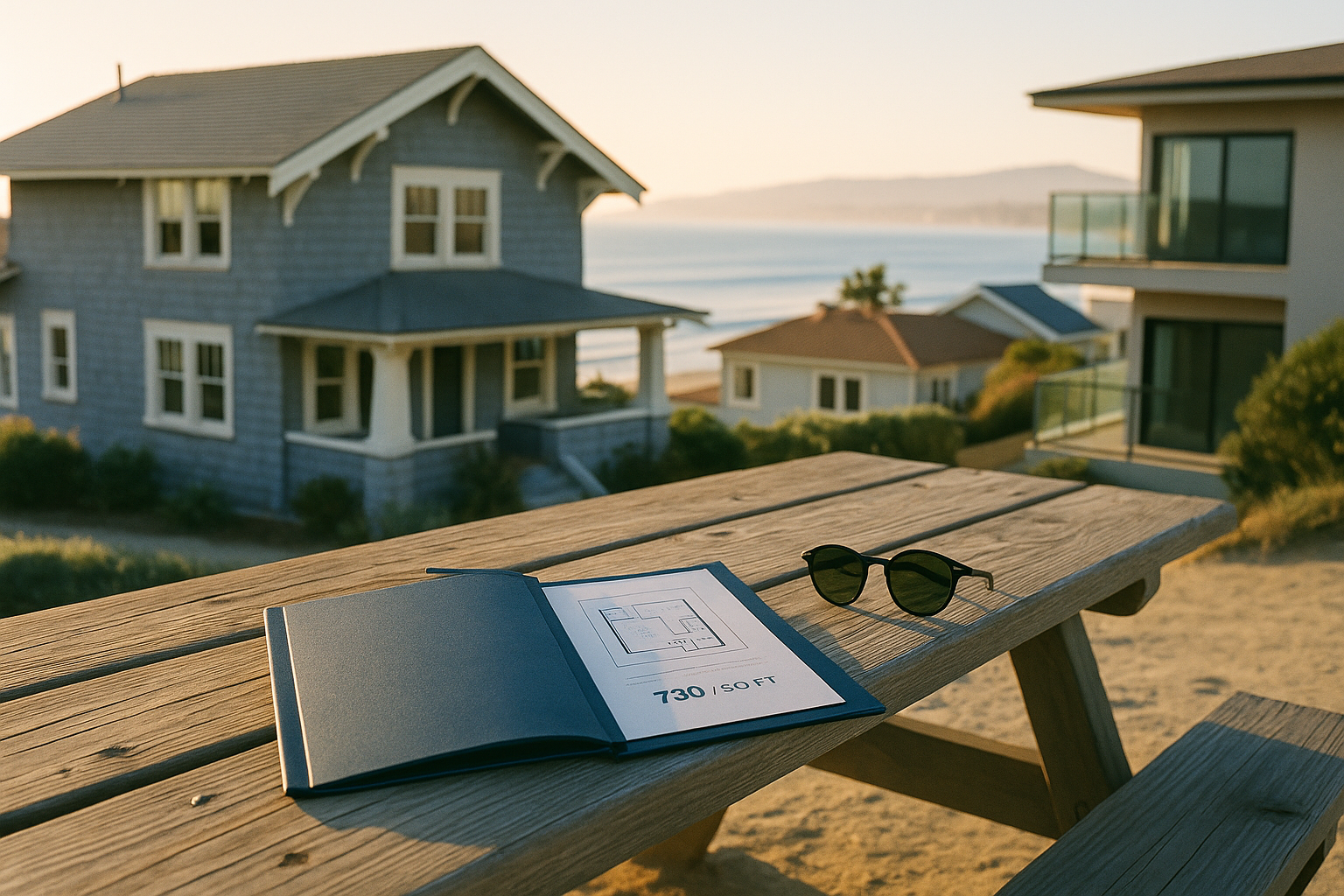
The Coastal Premium, Quantified
If you’ve toured a cottage in Leucadia, then crossed the 5 and seen a larger home inland for the same price, you’ve felt it: San Diego’s coastal premium. In plain numbers, buyers typically pay 20–45% more per square foot within a mile or two of the ocean versus comparable homes just a few miles east. That spread flexes by zip code and micro‑neighborhood—think Carlsbad 92008 (beach villages west of the 5) versus Carlsbad 92010 (Calavera Hills and newer inland tracts).
Using recent list pricing and neighborhood comps I track:
- Carlsbad 92008 vs. 92010: coastal single‑family homes commonly range $950–$1,300/sqft near the Village and Tamarack; inland 92010 hovers closer to $650–$900/sqft for similarly updated homes. Call it a 25–40% premium most weeks.
- Encinitas/Leucadia (west of 101) vs. Olivenhain: often $1,100–$1,600/sqft seaside versus $700–$1,000/sqft inland on larger lots—about a 30–50% gap.
- La Jolla vs. University City: La Jolla’s prime pockets frequently exceed $1,400/sqft, while University City’s SFRs trend $800–$1,050/sqft—roughly 35–45%.
Zooming to current listings for added context: an inland luxury estate at 18000 Sunset Point Rd, Poway 92064 is offered at $8,625,000, or $907/sqft—far from the beach, yet priced like many mid‑coastal homes per square foot because of its scale, finishes, and setting. Meanwhile, more typical inland family homes such as 13175 Entreken Avenue, Rancho Peñasquitos 92129 at $917/sqft and 13072 Trigger St, Rancho Peñasquitos 92129 at $987/sqft illustrate how close‑in suburbs with top schools narrow the coastal gap. On the entry side, a Mission Valley condo at 6036 Rancho Mission, San Diego 92108 is $679/sqft—central and convenient, but still below most beach‑area $/sqft.
What You’re Actually Paying For
The ocean view is the headline, but the line items behind the premium are practical:
- Climate and AC needs: West of the 5, you’ll often live with windows open nine months a year. Inland, summer highs run 8–15° warmer. That means bigger HVAC systems, higher electric bills, and sometimes solar to offset. If you love fresh air living and low AC usage, the coastal bump can partially pay you back over time.
- Marine layer and fog: Morning gray in May–June (and yes, often July) is real along the coast. Inland neighborhoods wake to sun earlier and enjoy warmer evenings. If you crave pool‑ready afternoons, inland wins. If you prefer sweater weather and cool sleeping temps, coastal is bliss.
- Lifestyle and access: From Leucadia’s eucalyptus‑shaded 101 with indie coffee spots to Pacific Beach’s boardwalk and La Jolla’s coves, the daily routine—sunset walks, surfing Cardiff Reef, biking to Carlsbad Village—carries value. Reduced drive time to sand also means you actually use the beach.
- Lot size and privacy trade‑offs: Inland often means bigger yards and three‑car garages. Coastal lots trend tighter, especially west of the 5. If you dream of an ADU and a pickleball court, you may stretch your dollars inland.
- School and commute dynamics: Districts like Poway Unified (Rancho Peñasquitos, parts of Carmel Mountain) keep inland demand and $/sqft higher than you might expect, shrinking the spread with mid‑coastal zips.
Is the Premium Worth It—for You?
Match the math to your lifestyle:
- Choose coastal if you prioritize daily beach access, natural AC, and walkable village life. In Encinitas/Leucadia, you’ll trade yard size for surf checks before work. In Carlsbad 92008, living near State St. and Tamarack Beach can add spontaneous date nights and bike‑to‑everything convenience.
- Choose near‑coastal or close‑in inland for balance. Mission Hills offers historic charm and bay glimpses with quick freeway access; Little Italy condos put you steps from India St and Piazza della Famiglia dining without coastal prices. Serra Mesa quietly gentrifies near Sharp Memorial—central, budget‑friendlier, and 15–20 minutes to the sand.
- Choose inland if space and sunshine top the list. Bonita’s pockets by Sweetwater Reservoir or Tierrasanta’s “island in the hills” trail network deliver family‑friendly homes, bigger yards, and warmer afternoons. Compare value: the pending 4201 Bonita Rd 253, Bonita 91902 at $521/sqft and 3648 Nassau Dr, San Diego 92115 at $449/sqft show how far your dollar can stretch away from the coast.
Practical framework:
- Run a true monthly cost: PITI + utilities + likely HVAC upgrades inland vs. potential exterior maintenance coastal (salt air, window hardware, exterior metals).
- Price your time: If weekend beach trips mean 90 minutes of round‑trip driving, coastal proximity can “pay” you in time back.
- Resale lens: Coastal areas often show steadier demand in down cycles. Inland homes near strong schools or transit (Rancho Peñasquitos, Kearny Mesa’s emerging mixed‑use nodes) can perform similarly well.
Neighborhood Snapshots and Next Steps
- Carlsbad 92008 vs. 92010: Expect a 25–40% $/sqft coastal premium. If you surf, bike, or work from cafes in the Village, the delta often feels worth it. If you need a newer floor plan and a yard, 92010 shines.
- Encinitas/Leucadia: Bohemian vibe, indie shops, morning fog, ocean breezes. Inland Olivenhain offers acreage, equestrian pockets, and sunnier afternoons.
- Poway and Rancho Peñasquitos: Inland but sought‑after for schools and hiking. Note how listings like 12243 Buckskin ($861/sqft) and 14645 High Valley Road ($670/sqft) underscore sub‑market variety even within the same city.
Bottom line: The coastal premium is real, but it’s not one‑size‑fits‑all. Let’s price it against the way you’ll actually live, work, and play in San Diego—from sunset strolls in Solana Beach to backyard BBQs in San Marcos.
Looking for help with the coastal premium? Contact Sam to get started: https://samsouri.com/contact
Get the monthly letter
San Diego market notes from Sam — plus investor insights from Prop2Profit.
1–2 emails a month. Unsubscribe anytime.